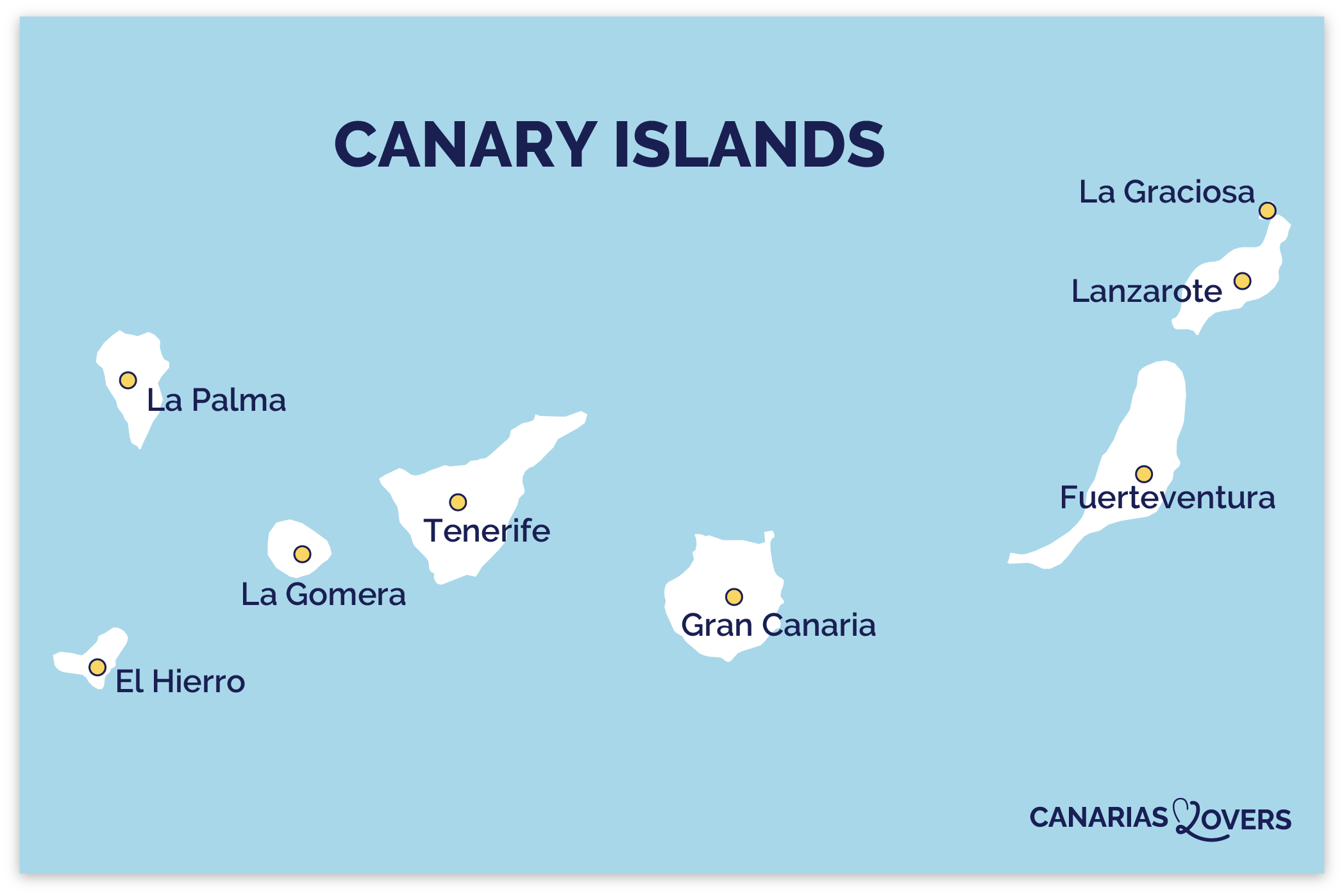
The Canaries are made up of seven main islands, each with a different coastline. Some rely on kilometers of blond dunes, others on volcanic coves or little-visited turquoise waters. To help you choose your destination according to your desires, we have selected the archipelago’s most remarkable beaches and classified the islands according to their seaside attractions.
And if you want a more general comparison of the islands: see our article.
This opinion is completely independent, based on our experiences. We visited the region anonymously, making our own choices and paying our bills in full.
Our opinion: which Canary island to choose for beaches
Here is our ranking of the Canary Islands for lovers of beautiful beaches, even if the choice is really difficult!

- Fuerteventura
The queen of beaches. Fine sand, immense dunes, Claire water. Not to be missed.
See where to stay in Fuerteventura - Lanzarote and La Graciosa
Wild beaches and volcanic landscapes. Less crowded, more authentic.
See where to stay in Lanzarote - Gran Canaria
Wide variety. Lively beaches to the south, discreet coves to the north.
See where to stay in Gran Canaria - Tenerife
Black sand beaches to the north, imported sand to the south. Ideal for combining sea and mountains.
See where to stay in Tenerife - La Palma
Volcanic black sand beaches, little visited. For travelers seeking peace and quiet. - La Gomera
Small hidden coves, sometimes difficult to access. Raw beauty. A main beach in the capital. - El Hierro
The most confidential island. Natural pools and exceptional seabed. No beach.
Where to stay in El Hierro
Fuerteventura’s beaches
Fuerteventura is by far the Canary Island with the longest coastline, with over 150km of beaches. We’ve stayed here several times, and the island never ceases to amaze us with the diversity of its coastlines.
See our list of Fuerteventura’s most beautiful beaches.

Types of beaches in Fuerteventura
Fuerteventura’s beaches are almost exclusively sandy: fine, white or slightly golden depending on the area. There are hardly any pebble beaches on this island.
You’ll also find some amusing “popcorn” beaches, not ideal for lying down, but surprising.
Services on the beaches of Fuerteventura
In the tourist resorts, Fuerteventura’s beaches offer a full range of services: surveillance in season, equipment rental, bars and restaurants nearby. The beaches of Corralejo, Costa Calma and Morro Jable are particularly well equipped for holidaymakers. Outside these zones, the beaches remain free of any infrastructure.

We recommend checking wind conditions before planning a beach day, as gusts can make some coastlines uncomfortable. Winds are frequent, especially in summer: surfers and kitesurfers gather at El Cotillo and Sotavento.
For families with children, the calm waters of Caleta de Fuste bay remain a safe bet.
Our favorite beachfront hotel in Fuerteventura
We loved our stay at the INNSide hotel in Costa Calma and highly recommend it. It offers an unforgettable experience thanks to its enchanting bohemian chic decor. And it’s not too big, which is also very pleasant.
From the moment we arrived, we were captivated by the magnificent wood and concrete textures that adorn the common areas, creating an atmosphere that is both natural and elegant. The spacious rooms, bathed in natural light, offer views of the surrounding countryside and the serene expanse of the sea.
See photos, prices and availability – and book!
or See our selection of beachfront hotels in Fuerteventura.

The beaches of Lanzarote and La Graciosa
Lanzarote boasts a unique coastline, shaped by volcanic activity. The sand is often golden, sometimes ochre, and the contrast between the black rocks and blue waters creates striking landscapes. In high season, it’s best to arrive early to find space.
See our list of Lanzarote’s most beautiful beaches.

Types of beaches in Lanzarote
Lanzarote’s beaches fall into two categories. To the south, in the tourist areas of Puerto del Carmen and Playa Blanca, the beaches are wide, fine sand and well developed. Further north, particularly around Famara, the beaches are long, windy and poorly equipped. Famara is renowned among surfers for its consistent waves, but is not recommended for family bathing.
Services on the beaches of Lanzarote
The beaches of Lanzarote’s tourist resorts, such as Puerto del Carmen and Costa Teguise, offer classic services: lifeguard surveillance in season, deckchair and parasol hire, and nearby restaurants. The natural beaches in the south, such as Papagayo, are less developed but still clean and accessible.

La Graciosa, the island of unspoilt beaches
La Graciosa is a small island to the north of Lanzarote, accessible by ferry from Órzola in around 25min. It’s one of the few Canary Islands still untouched by mass tourism. It has just a few hundred permanent inhabitants, no paved roads and almost no cars. We were charmed by its sandy beaches.
Our favorite sandy beach hotel in Lanzarote
Hotel Fariones: Truly exceptional. Our stay was a true source of pleasure: from the infinity pool to the tropical gardens, from the warm, elegant decor to the breathtaking sea views and the beachfront location (right next to Playa del Carmen’s main beach), not to mention the attentive staff…
This hotel lives up to its reputation. From the moment we arrived, we immediately felt at home, surrounded by palm trees and enchanting scenery.
See photos, prices and availability – and book!
or See our selection of beachfront hotels in Lanzarote.


Gran Canaria’s beaches
Gran Canaria offers one of the archipelago’s greatest diversity of beaches. The south of the island is home to the most popular seaside resorts, including Maspalomas and its famous dunes, which have been declared a nature reserve. We really liked the atmosphere in Puerto Mogán, a small fishing port with a certain charm.
To the north and east, the beaches are wilder, less accessible and sometimes battered by waves. On this island, you’ll find a veritable palette of coastal landscapes in a single stay.
See our list of Gran Canaria’s most beautiful beaches.

Types of beaches in Gran Canaria
The beaches of southern Gran Canaria are fine golden sand, often wide and well exposed to the sun. The Maspalomas dunes form an almost desert-like landscape, unique in the Canaries. To the north, Playa de Las Canteras, in Las Palmas, is a 3km-long urban beach protected by a natural rocky bar that gives it calm waters, perfect for swimming.
Services on Gran Canaria beaches
The great beaches of southern Gran Canaria, notably Playa del Inglés and Maspalomas, are very well equipped: lifeguard surveillance in season, first-aid post, water sports equipment hire, sunbeds and parasols, showers and restaurants. The beaches of Puerto Mogán and Amadores are smaller but equally well-maintained. Outside tourist areas, facilities are becoming rarer.

Our favorite toes-in-the-sand hotel in Gran Canaria
In Maspalomas, theHotel Lopesan Costa Meloneras Resort is an address we recommend for its privileged seafront location, just a stone’s throw from the dunes. The resort is spacious, featuring several swimming pools and direct access to the beach.
We particularly appreciated the quality of the on-site catering and the tranquility of the adjacent beach, which is less crowded than Maspalomas. It’s an ideal option for families who want to combine hotel comfort with immediate access to the sand.
See photos, prices and availability – and book!
or See our selection of beachfront hotels in Gran Canaria.

Tenerife’s beaches
Tenerife is the Canaries’ largest and most populous island. Its coastline is highly contrasted: in the north, the sand is often black and the beaches naturally formed by volcanic erosion. To the south, in the seaside resorts, the beaches are laid out on golden sand.
See our list of Tenerife’s most beautiful beaches.

Type of beaches in Tenerife
In the south of Tenerife, the beaches of Los Gigantes and Costa Adeje offer ideal conditions for seaside resorts.
A little more authentic, El Médano is a natural beach of golden sand, very popular with kitesurfers.
Las Teresitas, near Santa Cruz, is a large beach with sand imported from the Sahara, surrounded by palm trees and resembling an artificial lagoon.
The northern beaches, such as Benijo and Almáciga, are black volcanic sand, wild and rarely visited.
Beach services in Tenerife
The major resorts in the south of Tenerife offer supervised beaches with a full range of services: sunbed and parasol hire, showers, beachside restaurants and bars. Playa de Fañabé in Costa Adeje is one of the island’s best-maintained beaches. Outside tourist areas, facilities are limited or non-existent.

Our favorite beachfront hotel in Tenerife
With riect access to Playa de Fañabé, this luxury hotel charmed us with its tranquility and location. Ideal for relaxation, it boasts 2 superb outdoor pools, one with a small waterfall, as well as private access to the beach.
We really liked our room, with its traditional Canary Island decor and pleasant balcony.
See prices, photos and availability – and book now!
or See our selection of beachfront hotels in Tenerife.

The beaches of La Palma
La Palma is a green, mountainous island, often nicknamed the “Isla Belle” for its lush natural beauty. Its coastline is made up mainly of black volcanic sand beaches, giving it a very distinctive visual identity. The sea is a deep blue, and the contrast is striking. You won’t find any long sandy beaches here.

Types of beaches in La Palma
La Palma’s best-known beaches are Playa de los Cancajos, south of Santa Cruz de La Palma, and Puerto Naos, on the west coast. Los Cancajos is a black-sand beach with calm, clear waters, popular with snorkellers. Puerto Naos is a larger, family-friendly facility.
Northern beaches are wilder and often inaccessible due to cliffs. La Palma is better suited to nature-conscious travellers than to classic beach tourism.
Beach services in La Palma
Facilities are available on the beaches of Los Cancajos and Puerto Naos: lifeguard surveillance in season, a few restaurants nearby and diving equipment rental. The other beaches on the island have little or no facilities.
The beaches of La Gomera
La Gomera is a round, rugged island whose coastline is indented by ravines that descend all the way to the sea. Beaches are few and far between, often small and of black or grey volcanic sand. It’s primarily an island for hiking, with a few beautiful coves to top it off.

Types of beaches in La Gomera
La Gomera’s beaches are of volcanic black sand or pebbles, with few facilities. Valle Gran Rey is home to the island’s main beaches: Playa de La Calera and Playa del Charco del Conde.
The capital San Sebastian offers a black sand beach with a few services.
The beaches of El Hierro
El Hierro is the smallest and most westerly of the Canary Islands. Classified as a biosphere reserve by UNESCO, it attracts divers and travelers in search of unspoiled nature. There are few beaches here, most of them replaced by natural pools carved out of volcanic rock.
La Restinga has a small beach of sand and black pebbles.
See our list of natural pools.

3 Canary Islands resorts with the best beaches
Of all the resorts in the Canaries, three stand out for the quality of their beaches, their accessibility and their infrastructure. Here’s our selection for travelers who want to enjoy a quality seaside resort without compromise.
1. Playa Blanca (Lanzarote)
Playa Blanca is a seaside resort in the south of Lanzarote, about 1 hour from the airport. It’s one of our favorites in the archipelago for its combination of serenity and natural beauty.

Playa Blanca’s urban beaches are full of golden sand and charm. A few kilometers away, the Papagayo coves are a treasure trove accessible by car, on foot or by water cab. You can spend a whole day here, moving from cove to cove depending on wind exposure.
We particularly like this resort for its quieter atmosphere than Puerto del Carmen, while still being well-equipped.
See our selection of the best hotels in Playa Blanca.
2. Maspalomas (Gran Canaria)
MaspalomasMaspalomas, in the south of Gran Canaria, is one of the Canaries’ most famous seaside destinations. Its sand dunes, classified as a nature reserve, form a unique desert and coastal landscape. The beach stretches for several kilometers and is accessible to all. We saw a great diversity of travelers: families, couples, groups, all finding their place on this wide shoreline.

The proximity of the Meloneras resorts means you can enjoy all the services you need without sacrificing the beauty of the site. What’s more, access to the dunes is on foot from the beach, making it an unusual seaside walk.
See our selection of the best hotels in Maspalomas.
3. Costa Adeje (Tenerife)
Costa AdejeCosta Adeje, in the south-west of Tenerife, is the island’s most upmarket seaside resort. It is home to several well-kept beaches, including Playa del Duque, which regularly wins awards for the quality of its water and facilities. We’ve stayed in this area several times and appreciate the upscale infrastructure, from hotels to restaurants.

Costa Adeje is also close to Siam Park, one of Europe’s most renowned water parks, making it a particularly family-friendly destination. The area enjoys almost constant sunshine, even in winter, which explains its popularity with sun-seeking European travelers.
See our selection of the best hotels in Costa Adeje.
10 most beautiful beaches in the Canary Islands
The choice is truly impossible, and everyone has their favorites. There are plenty more, but this should start to inspire you…
1. Playa de las Conchas (La Graciosa)
We place Playa de las Conchas at the top of our ranking for the purity of its white sand, the color of its waters and its total isolation. Swimming is not recommended here due to the currents, but the panorama is unique in the Canaries. You can get there on foot from the village of Caleta del Sebo in around 40min.

- Island: La Graciosa
- Area: North of the island, 40min walk from Caleta del Sebo
- Soil type: Fine white sand
- Facilities: None
- Monitoring: Unmonitored
2. Playa el Medano (Tenerife)
A popular destination for its ideal wind conditions, Playa del Médano is a renowned spot for water sports. With its fine sand and shallow waters, it’s ideal for families and thrill-seekers alike. We loved the stunning view of Montaña Roja. It’s a beach that invites relaxation and contemplation.

- Island: Tenerife
- Area: South of Tenerife
- Soil type: Golden sand
- Facilities: Sun loungers and parasols for hire, showers
- Supervision: supervised in house according to sections
3. Playa de Sotavento (Fuerteventura)
Playa de Sotavento, on the Jandía peninsula, is a double beach: at low tide, a shallow lagoon forms between the sandbar and the coast, creating calm turquoise waters ideal for children. We were impressed by the size of the site and the quality of the sand. It’s also the site of the Windsurfing and Kitesurfing World Championships, giving it a special atmosphere in summer.

- Island: Fuerteventura
- Area: Jandía Peninsula, east coast
- Soil type: Fine white sand
- Facilities: Some restaurants, nautical equipment rental
- Monitoring: Partial in season
4. Playa de Papagayo (Lanzarote)
Playa de Papagayo and its neighboring coves form one of the Canaries’ most photographed coastal ensembles. Golden sands, translucent waters and volcanic tuff cliffs make for a stunning backdrop. We enjoyed moving from one cove to another depending on the wind direction.

- Island: Lanzarote
- Area: South of Lanzarote, near Playa Blanca
- Soil type: Fine golden sand
- Facilities: Bar, pay parking lot, toilets
- Surveillance: High-season surveillance
5. Playa de las Canteras (Gran Canaria)
Playa de las Canteras is the main urban beach of Las Palmas de Gran Canaria. It is protected by a natural rock bar, the “La Barra”, which creates a lagoon with calm waters ideal for swimming. We consider it a city beach like no other, ideal for enjoying the sea in the heart of a dynamic capital.

- Island: Gran Canaria
- Zone: Las Palmas de Gran Canaria, seafront
- Soil type: Golden sand
- Facilities: Complete (showers, deckchairs, restaurants, promenade)
- Supervision: Supervised during the season, depending on the section
6. Playa del Maspalomas (Gran Canaria)
It’s hard not to love Maspalomas beach: a huge expanse of sand where everyone can find a little spot or take a long walk with their fingers in the sand. You’ve got 6km to enjoy! The beach starts at the famous Maspalomas lighthouse and continues along the magnificent sand dunes.

- Island: Gran Canaria
- Area: Maspalomas, south
- Soil type: Golden sand
- Facilities: Complete (deckchairs, parasols, restaurants, showers) near the lighthouse
- Supervision: Supervised in season near the lighthouse
7. Playa de Famara (Lanzarote)
Playa de Famara, in the north-west of Lanzarote, is a 6km-long beach dominated by the impressive cliffs of Risco de Famara. The wind is almost permanent, making it a paradise for surfers and kitesurfers. There, we watched surfing sessions from the seawall of the village of La Caleta de Famara. For swimmers, the sea can be rough, but the scenery is one of the most impressive we’ve seen in the Canaries.

- Island: Lanzarote
- Area: Northwest Lanzarote, La Caleta de Famara
- Soil type: Golden sand
- Facilities: Several restaurants and surf schools in the village
- Supervision: Partial in high season
8. Playa del Matorral (Fuerteventura)
At Morro Jable, a very long sandy beach stretches for several kilometers: Playa del Matorral. It’s perfect for those of us who love long walks with our feet in the water and sand.
It is divided into 3 sections, with the two busiest in the south:
The narrower area around the old center of Morro Jable. It has a great atmosphere and a nice view of the city.
In the center, the sand section becomes extremely wide. We love the open spaces between the beach and the protected wetlands. Here you can breathe and find a little corner of calm.
It’s easy to find your way around thanks to the lighthouse in the middle, as the expanse of sand makes it easy to wonder where your things are once you’re in the water.

- On the southeast coast
- In the town of Morro Jable
- Fine sand
- Sections with loungers and supervision, other sections without facilities
9. Playa de la Concha (Fuerteventura)
At El Cotillo, the beaches offer magnificent little lagoons for family relaxation, far from the crowds of seaside resorts.

- Island: Fuerteventura
- Zone: Northwest
- Soil type: White golden sand
- Facilities: Depending on the cove
- Surveillance: Depending on the cove
10. Playa del Benijo (Tenerife)
Playa del Benijo seduced us with its wild beauty and secluded atmosphere. This black sand and pebble beach offers breathtaking scenery with its spectacular rock formations and sculpted cliffs.

- North coast of Anaga Rural Park
- Pointe Nord
- From Santa Cruz de Tenerife: 1h (via small road)
- Very few parking spaces
- Unsupervised beach
- No installations
DISCOVER THE Canary Islands