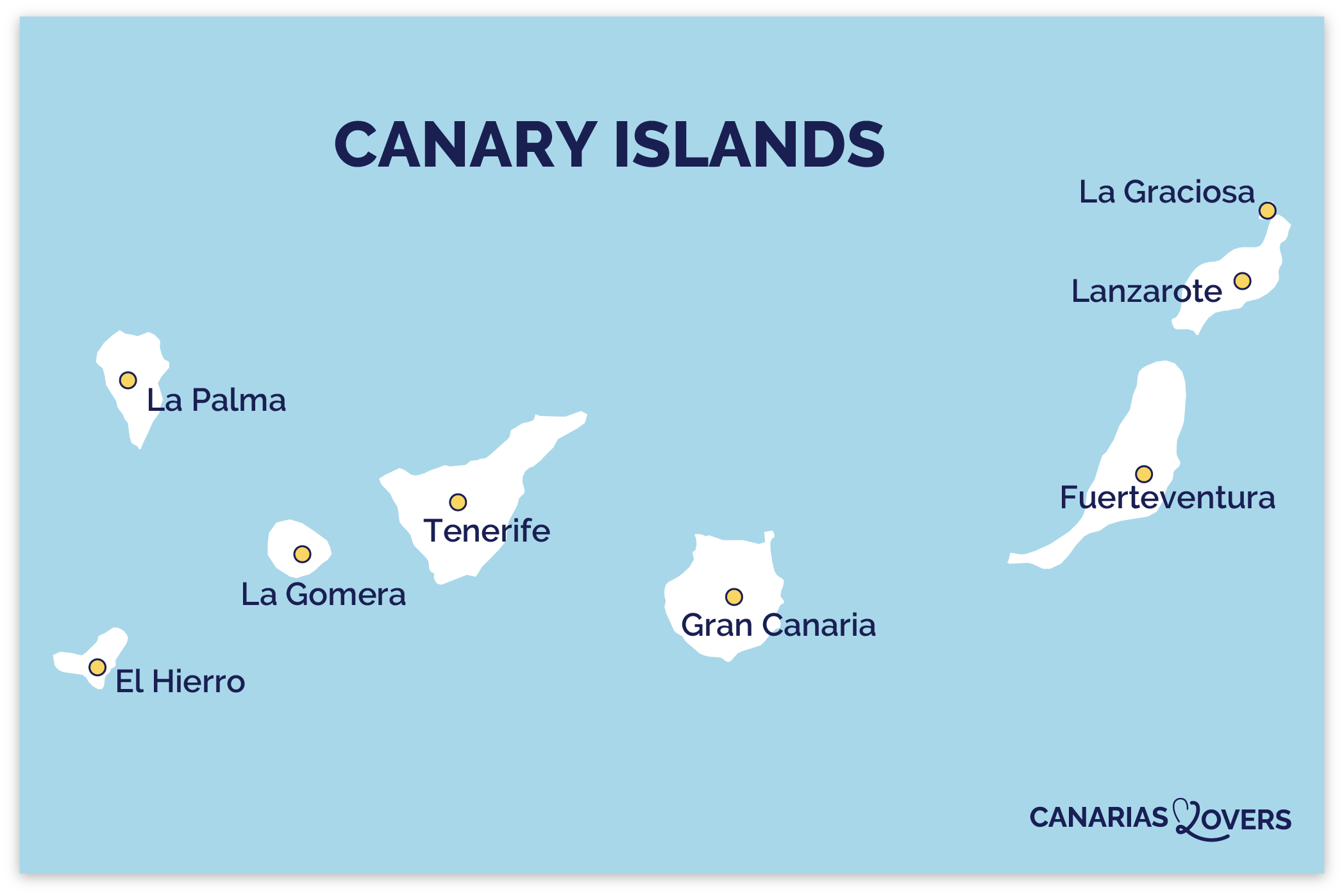
The Canary Islands are more than just beaches and sunshine. Each island has a cultural identity shaped by centuries of history. Museums, Guanche archaeological sites, UNESCO-listed cities, world-famous carnivals, street art, unique cuisine… the archipelago offers a wealth of culture that often comes as a pleasant surprise.
We’ve explored all the islands, and here we offer an island-by-island overview to help you choose your destination based on your interests.
This opinion is completely independent, based on our experiences. We visited the region anonymously, making our own choices and paying our bills in full.
Our Take: Which Canary Island Is Best for Culture?
Each island has its own cultural attractions. Here’s a quick overview to help you decide based on your priorities:
- Gran Canaria: The Most Well-Rounded Destination. A lively capital city, excellent museums, Guanche archaeological sites, international festivals (WOMAD, Las Palmas de Gran Canaria Film Festival), and a very festive carnival.
See where to stay in Gran Canaria - Tenerife: Spain’s most famous carnival, two UNESCO-listed cities, remarkable colonial architecture, a thriving culinary scene, and a vibrant wine culture.
See where to stay in Tenerife - Lanzarote: an island where art blends into the landscape, thanks to César Manrique’s unique legacy. Volcanic viticulture in La Geria is also a cultural experience in its own right.
See where to stay in Lanzarote - La Palma: one of the best-preserved historic centers in the archipelago, with a long-standing winemaking tradition and authentic local festivals.
- Fuerteventura: The former capital, Betancuria, and the street art in Puerto del Rosario are worth a visit, even though the island is primarily known for its nature and beaches.
See where to stay in Fuerteventura - El Hierro and La Gomera: islands where culture is deeply intertwined with traditions and nature. El Hierro for the Bimbaches Heritage and the Guinea Ecomuseum; La Gomera for El Silbo, a whistled language listed by UNESCO.
And if you’re looking for a more general comparison—beyond just culture— check out our article on which island to choose in the Canary Islands.

Gran Canaria: The Archipelago’s Cultural Capital
In our opinion, Gran Canaria is the Canary Island that offers the broadest and most diverse cultural scene.
A capital city that buzzes with culture
Its capital, Las Palmas de Gran Canaria, is a true metropolis with a population of over 380,000, boasting an arts, food, and nightlife scene unlike any other in the archipelago.
We’ve been back there several times, and we always feel like we’ve only seen a small part of it. It is ideal for travelers interested in pre-Hispanic archaeology, contemporary festivals, or local cuisine.

Many other charming towns and villages
In our opinion, Gran Canaria is also the city with the most beautiful villages and old town centers. And here again, it offers a wide variety of styles.
Find out more about our favorite towns and villages. Among our favorites:
- Aguïmes with its colourful Canarian houses and sculptures
- Teror with its cobbled streets, colonial architecture and wooden balconies
- Arterana and its multitude of viewpoints
- …

A variety of museums
The historic district of Vegueta in Las Palmas is home to the island’s main cultural institutions. But you can find them in several towns dedicated to different artists or different aspects of life on Gran Canaria.
Check out our selection of the best museums in Gran Canaria, including:
- The Casa de Colón, the former residence of the governors where Christopher Columbus stopped during his first voyage to the Americas in 1492, traces the history of transatlantic exchanges.
- The Museu Canario houses the archipelago’s largest collection of Guanche archaeological artifacts, including mummies and trepanated skulls.
- The Antonio Padron House Museum in Galdar: Discover the life and work of the Canarian artist

Archaeological Sites
Gran Canaria offers a multitude of archaeological sites testifying to the history and culture of the ancient Canary people, the Guanches.
Archaeologists believe they arrived on the islands between the 5th and 2nd centuries BC, probably from North Africa. They were organized into tribes and lived by farming, herding and fishing.
To find out more, see our article on the best archaeological sites in Gran Canaria. If you only need to visit 3 to get different aspects of the culture, we recommend:
- Cenobio de Valeron, the most surprising site on a mountainside
- Los Gatos, Canada, to see the layout of a village
- Maipés Archaeological Site, if you prefer scenic views
- Cueva Pintada, if you like ancient paintings

Festivals and Contemporary Cultural Life
Gran Canaria is also an island known for major cultural events. The WOMAD (World of Music, Arts, and Dance) festival in Las Palmas is one of Europe’s most important world music festivals, transforming the capital’s city center into a giant stage every year. The Las Palmas de Gran Canaria International Film Festival, a showcase for independent cinema from around the world, is held every spring. And the Las Palmas Carnival, Spain’s second-largest carnival after the one in Santa Cruz de Tenerife: a colorful festival that brings together hundreds of thousands of people over several weeks.
Tenerife: Carnival, UNESCO-listed cities, and cuisine
Tenerife is the most populous and most popular tourist destination among the Canary Islands, but it is also one of the most culturally rich. It boasts two cities listed as UNESCO World Heritage Sites, Spain’s most famous carnival, a thriving culinary culture, and well-preserved colonial architecture in several inland towns.

Architecture and Historic Cities
Tenerife offers a wonderful variety of towns and villages, each with its own unique charm. See our list of the most beautiful towns and villages. Among our favorites:
- La Laguna—a UNESCO-designated university town known for its colonial architecture. Its checkerboard-like urban layout, colorful facades, and religious buildings form a cohesive whole that is easy to explore on foot.
- La Orotava is home to splendid Canarian houses with carved wooden balconies and the Marquesado de la Quinta Roja Garden
- Masca – a hilltop village perched high in the mountains, offering spectacular views
- Puerto de la Cruz with its colourful houses and street art
- Garachico, which was destroyed by a volcanic eruption in the 18th century and rebuilt on solidified lava, has retained an atmosphere of rare authenticity.
- …

Museums
In Tenerife, museums are located mainly in three cities: Santa Cruz, La Laguna, and Puerto de la Cruz. See our selection of the best museums in Tenerife. Here are a few of them:
- TEA Museum – Art Museum in Santa Cruz
- Casa de los Balcones in La Orotava, built in 1632 with exceptional carved balconies
- Canary Islands Military History Museum
- El Portillo Museum in Teide

Botanical Science
If you love trees, you won’t be disappointed in Tenerife. See our list of the most beautiful gardens and trees in Tenerife… Among other things, you’ll discover:
- The laurel forest of Tenerife, La Esperanza, on the Anaga massif. A primeval forest that already existed during the Tertiary Period
- The Millennial Dracona Tree of Icod de los Vinos
- The Puerto de la Cruz botanical garden with its magnificent century-old trees
- Palmetum de Santa Cruz
- …

Carnival, Festivals, and Wine Culture
The Santa Cruz de Tenerife Carnival is officially the second-largest carnival in the world after the one in Rio de Janeiro, and the largest in Spain. It takes place every year in February or March and lasts several weeks. The city is in a constant state of celebration, day and night.

Tenerife also has a long-standing and diverse wine-growing tradition, spread across several production regions. The vines grow at high altitudes in the Tacoronte-Acentejo region or in the vicinity of Icod, often on steep slopes. La Casa del Vino, in El Sauzal, offers wine tastings and exhibitions on the island’s viticulture.
Lanzarote: Art Blending into the Volcanic Landscape
Lanzarote holds a special place in the archipelago from a cultural standpoint. The island owes much of its uniqueness to César Manrique, an artist and architect born on the island, who shaped its visual identity throughout the 20th century. His works blend into the volcanic landscape, and his principles of architectural integration have become an informal set of guidelines that the island still follows today: no billboards, no tall buildings, and light-colored buildings. We were struck by the island’s aesthetic coherence from the moment we first visited.

The Legacy of César Manrique
César Manrique’s major works are scattered throughout the island and form a cultural tour in their own right. Learn more in our dedicated article. Here are a few examples:
- The Cactus Garden, located in a former quarry, features more than 1,500 cacti in a sculpted landscape.
- Jameos del Agua has transformed a collapsed lava tunnel into an exhibition space, restaurant, and amphitheater.
- The Mirador del Rio, housed in a former military battery, blends seamlessly into the cliff while offering one of the most beautiful views of La Graciosa in the archipelago.

- The César Manrique Foundation, housed in its own building constructed on five volcanic domes, traces his artistic career.
- The LagOmar Labyrinth House, designed by Jesús Soto from a former quarry, was the home of actor Omar Sharif.
These places reflect a consistent philosophy: to make architecture an art form that engages with nature rather than imposing itself on it. You can take a one-and-a-half-day Manrique tour from any seaside resort on the island.

Wine Growing: The Volcanic Vineyards of La Geria
La Geria is one of the most unique wine-growing regions in the world. The vines grow there at the bottom of small craters carved into the black lapilli, with each vine protected by a semicircular stone wall. This landscape, entirely shaped by human hands, is designated as a protected natural area.

We were captivated by the contrast between the dark rock and the delicate green of the vines. This technique, developed in the 18th century to capture nighttime moisture, is used primarily to produce white Malvoisie—either dry or sweet. Several bodegas offer wine tastings: Bodega El Grifo, founded in 1775, is the oldest winery in the archipelago and features a small, informative museum.
Find out more.

OUR TIPS FOR RENTING A CAR IN THE Canary Islands
- Compare prices on our preferred platform: DiscoverCars – one of the best rated sites.
- Choose a motor powerful enough for Tenerife and La Gomera. A small car is sufficient for the other islands
- But you can also choose a larger one if you wish, as the parking spaces are rather large.
- There’s a lot of demand and these are islands, so book early.

Fuerteventura: From the Old Capital to Street Art
Fuerteventura isn’t the first island that comes to mind when talking about culture in the Canary Islands. Its natural and seaside attractions often overshadow its historical significance. However, we discovered two very distinct types of cultural experiences on this island: a historical heritage concentrated inland and urban street art thriving along the coast.
Cheese
The island is also known for its Majorero goat cheese, the only cheese in the Canary Islands to hold a protected designation of origin, which you can discover at the Museo del Queso Majorero in Antigua.

Various Aspects of Historical Life
As you explore a wide variety of places, you’ll discover surprising aspects of life and history on Fuerteventura. Check out our selection, for example:
- The La Atalayita archaeological site in an ancient lava flow. You can explore some of the early stone houses built by the island’s former inhabitants before the Norman conquest
- The Salt Flats: Salinas del Carmen – The salt flats were founded in the 18th century and are still in operation today. Paludiers still produce salt using traditional methods.
- La Alcogida Ecomuseum, an open-air museum where you can discover life on the island

Betancuria, the first capital of the Canary Islands
Betancuria, founded in 1404, was the first capital of the Canary Islands and retains a sense of rare tranquility to this day. The Church of Santa María de Betancuria, rebuilt in the 17th century after the raid by the pirate Jaban, is the oldest religious building in the archipelago. Find out more.

Street Art and Modern Art
Puerto del Rosario, the current capital, is nicknamed the “city of 150 sculptures”: contemporary works of art line the waterfront and the city center.
Gran Tarajal, for its part, is home to large murals on the facades of its buildings, which you can explore on foot in less than an hour.

La Palma, El Hierro, and La Gomera: Preserved Cultures
These three smaller islands offer a different cultural experience: fewer museums and festivals, but a sense of authenticity and a closer connection to local traditions that the larger islands can no longer offer in the same way. We recommend them to curious travelers who prefer cultural immersion to cultural consumption in the broader sense.
El Hierro: The Legacy of the Bimbaches
El Hierro is the smallest island in the archipelago and the least touristy. Its culture is closely linked to the history of the Bimbaches, the pre-Hispanic people who inhabited the island before the Spanish conquest.

The Ecomuseo de Guinea, located in the El Golfo Valley, features a reconstruction of a Bimbache village and an exhibition on the way of life of this civilization. At the adjacent Lagartario, visitors can see the El Hierro giant lizard, an endemic species currently being reintroduced. We found these two places to be particularly well-documented for such a small island.
In addition, the Fiestas de La Bajada de la Virgen de los Reyes, celebrated every four years, are the island’s major cultural event, bringing the entire population together in a procession. And on the island, there is a beautiful work by César Manrique: El Mirador de La Peña

La Gomera: El Silbo and UNESCO World Heritage
La Gomera is home to a unique cultural treasure: El Silbo Gomero, a whistled language that allowed the island’s inhabitants to communicate from one side of the island’s deep ravines to the other, over distances of several kilometers. Designated as part of UNESCO’s Intangible Cultural Heritage in 2009, El Silbo is still taught in schools and practiced during local festivals.
The capital, San Sebastián de La Gomera, also has a historic 15th-century tower from which Christopher Columbus is said to have been seen for the last time before crossing the Atlantic. This colorful city has managed to preserve all of its authenticity.

La Palma: Old Town and Festive Traditions
Santa Cruz de La Palma is one of the best-preserved historic towns in the entire archipelago. Its 16th-century waterfront, lined with Canarian houses featuring intricately carved wooden balconies, gives the impression of a scene frozen in time. We appreciated the cohesiveness of this architectural ensemble, which is perfect for a long, car-free stroll.
The island is also home to a long-standing wine-growing tradition, particularly in the Fuencaliente area in the south, where wines are produced on the slopes of a volcano on soil formed by the 2021 eruption.
The Fiestas de Los Indianos, celebrated on Carnival Monday, are among the most unique in the archipelago: the entire population dresses in white and throws talcum powder at one another, in reference to the emigrants who returned from America having made their fortunes. A festive occasion like no other.

Canarian cuisine is one of the archipelago’s most accessible cultural expressions. She draws on Iberian, African, and pre-Hispanic culinary traditions to create simple, flavorful dishes that are deeply rooted in her region.
- Papas arrugadas— potatoes boiled in very salty water and served with mojo sauce, either red (with chili peppers) or green (with cilantro)—appear on almost every menu.
- Gofio, a flour made from roasted grains that originated with the Guanches, is used in soups, desserts, and side dishes that cannot be found anywhere else in Spain.
Each island has its own specialties. Majorero cheese from Fuerteventura is the only goat cheese in the archipelago with a protected designation of origin. Lanzarote produces volcanic wines unlike any others. Tenerife and Gran Canaria offer a more sophisticated restaurant dining experience, where chefs prepare dishes using local ingredients such as fish, meat, and island vegetables.

Practical advice
How to Get Around to Visit Cultural Sites
A rental car is the best way to explore the cultural sites of the Canary Islands. The vast majority of historic villages, archaeological sites, and vineyards are not served by public transportation or require very long bus rides to reach. We recommend booking in advance, especially during peak season, to get a good rate.
The larger islands, such as Tenerife and Gran Canaria, have reliable city bus systems for traveling between Las Palmas, Santa Cruz, and La Laguna. But if you want to venture off the beaten path, a car is still a must.
When to Go to Festivals in the Canary Islands
- The carnivals in Santa Cruz de Tenerife and Las Palmas de Gran Canaria take place in February or March.
- The WOMAD festival in Las Palmas is usually held in November.
- The Las Palmas International Film Festival takes place in March or April.
- Corpus Christi in La Orotava, known for its carpets of flowers and colored sand, is celebrated in May or June, depending on the liturgical calendar.
- The Fiestas de Los Indianos in La Palma take place every year on Carnival Monday.
- The Bajada de la Virgen in El Hierro takes place every four years.
- Most local patron saint festivals take place between June and September throughout the islands.
DISCOVER THE Canary Islands