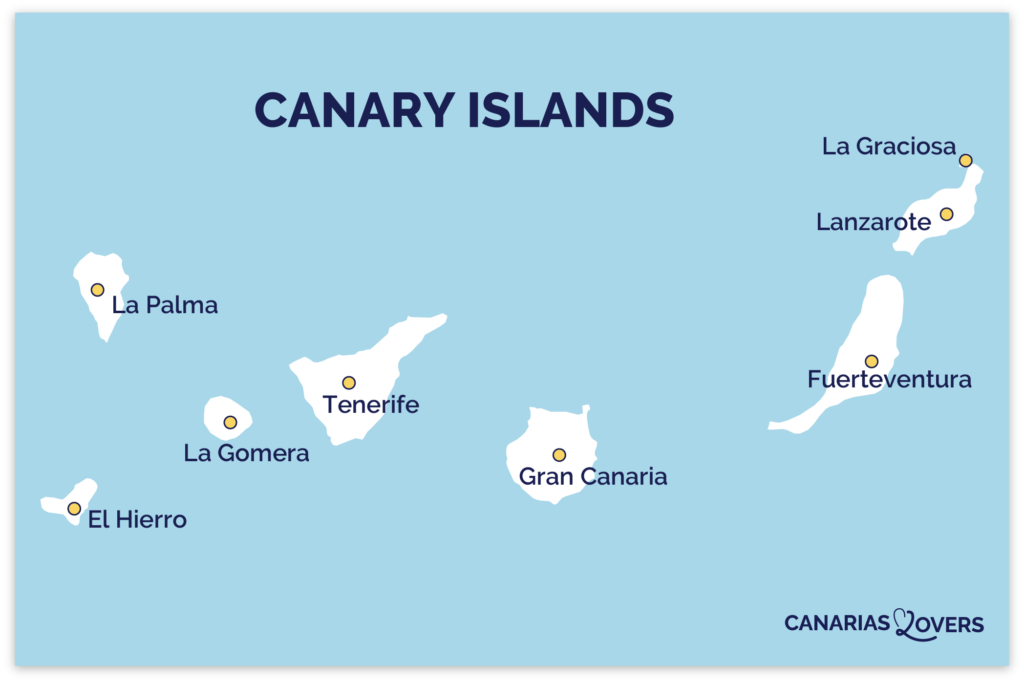
The Canary Islands enjoy a well-deserved reputation: the sun shines almost all year round, temperatures remain mild in every season, and rain is rare. But from one island to the next, the wind, clouds, and temperature vary slightly. In this guide, we compare the seven islands of the archipelago based on several criteria:
- Which island has the best overall weather,
- The warmest of the Canary Islands, in both summer and winter,
- The best island for winter sun,
- The least windy island,
- Which island to choose each month, from January to December.
This opinion is completely independent, based on our experiences. We visited the region anonymously, making our own choices and paying our bills in full.
Our quick take: Which Canary Island is best for the weather?
There is no one-size-fits-all answer. The best island in the Canaries for the weather depends on what you’re looking for: escaping the wind, seeking warmth, enjoying maximum sunshine in winter, or simply enjoying the best possible weather no matter the season.

We have therefore compiled several rankings based on the most frequently requested criteria, island by island and month by month.
- For the best overall weather year-round, Lanzarote and Fuerteventura, followed by southern Tenerife and Gran Canaria
- The hottest islands in summer: Gran Canaria and Tenerife are the two hottest islands in summer, with temperatures sometimes exceeding 30°C on the hottest days.
- Winter temperatures: the differences are less pronounced; all the islands range between 18 and 22°C during the day, with Fuerteventura and Lanzarote making up for this with more consistent sunshine.
- Best island for winter sun: Lanzarote comes out on top in our ranking, with an average of 8.5 hours of sunshine per day (followed by Fuerteventura and southern Tenerife)
- The least windy island: If you’re sensitive to wind, avoid Fuerteventura and Lanzarote—they’re the two most exposed islands in the archipelago, especially from June through September. El Hierro is by far the least windy of the Canary Islands.
- The best island for beaches: see our dedicated article

We will provide more details on each of these points later in the article. But if you’d like to start exploring one of the islands right away:
- Lanzarote: Best Time to Visit – Attractions – Where to Stay
- Fuerteventura: Best Time to Visit – Attractions – Where to Stay
- Tenerife: Best Time to Visit – Attractions – Where to Stay
- Gran Canaria: Best Time to Visit – Attractions – Where to Stay
- El Hierro: Best Time to Visit – Attractions – Where to Stay
- La Gomera
- La Palma

Best overall weather in the Canary Islands
All the Canary Islands share a similar climate: little rain, mild temperatures, and plenty of sunshine.
Fuerteventura and Lanzarote: the sunniest islands
Fuerteventura and Lanzarote are the sunniest islands in the archipelago. Their relatively low elevation (806 meters for Fuerteventura, 672 meters for Lanzarote) prevents the formation of persistent clouds, resulting in clear skies almost all the time. Thunderstorms are rare, and the sun shines all year round.
We’ve rarely experienced a truly overcast day on these two islands, even in the middle of January. On the other hand, trade winds blow there regularly, especially between June and September. This wind is a boon for water sports enthusiasts, but it can be a nuisance for vacationers who are simply looking to relax on the beach.

Tenerife: two distinct climate zones
Tenerife is an island of contrasting climates. Mount Teide, whose summit rises to 3,715 meters, plays a key role: it blocks the clouds from the north and allows the southern part of the island to bask in almost constant sunshine. On several occasions, we’ve had the striking experience of setting out from a sunny southern coastline only to find, 30 minutes later, the north shrouded in mist and low-hanging clouds. Anaga Park, in particular, receives more rain and stays cooler.
In contrast, Costa Adeje, Los Cristianos, and Playa de las Américas boast some of the highest sunshine levels in Europe: an average of 8.5 hours of sunshine per day. If you’re heading to Tenerife in search of good weather and beaches, the south is clearly the best choice.

Gran Canaria: sunshine in the south, clouds in the north
Gran Canaria operates in a manner similar to Tenerife, but the differences are less pronounced. The central mountain range (reaching a height of 1,949 meters at Pico de Las Nieves) divides the island into two distinct areas: a dry southern region facing Maspalomas, Puerto Rico, and Puerto Mogán, and a greener northern region that receives more rainfall in winter.
Sunshine statistics for Gran Canaria are slightly lower than those for Tenerife or Lanzarote, averaging 7.7 hours per day, due to the clouds trapped by the mountains. We haven’t found this to be a problem in practice: the sky remains clear most days at the southern stations. The island also offers a remarkable variety of landscapes for those who wish to explore every corner of it, from the dunes of Maspalomas to the Tejeda Gorge. See our selection of the most beautiful beaches in Gran Canaria.

La Palma, La Gomera, El Hierro: the green islands
The three western islands of the archipelago are more humid than their eastern counterparts. Their rugged terrain traps the clouds carried by the trade winds, nourishing dense laurel forests and lush vegetation not found on Lanzarote or Fuerteventura.
El Hierro, the smallest and most isolated of the islands, features a dry southern region (around La Restinga) and highlands that are often shrouded in mist. La Palma and La Gomera receive more rain, especially on their northern slopes. We recommend them above all to hikers and lovers of unspoiled nature, not to those looking to maximize their chances of sunny weather.

The hottest island in the Canary Islands
People often ask: Which of the Canary Islands is the warmest? The answer varies depending on the season and the criteria used (maximum temperatures, minimum temperatures, or overall perceived temperature). Here is our island-by-island comparison.
The hottest island in the summer
In summer, Gran Canaria is the island with the highest temperatures in the archipelago, with daytime highs sometimes exceeding 31°C in the southern coastal areas. Tenerife is not far behind, with temperatures ranging from 24 to 30°C depending on the area, and can experience spikes during episodes of Saharan winds (“calima”) that push the thermometer well above that.We’ve experienced several of these episodes: the heat becomes oppressive, the sky takes on a yellowish hue, and outdoor activities become grueling.

Lanzarote and Fuerteventura have slightly cooler summer averages (around 24°C), but the trade winds make the heat bearable. The western islands (El Hierro, La Gomera, La Palma) remain the coolest in summer, with temperatures ranging from 22 to 26°C along the coast, making them a good choice for those looking to escape the heat.

The warmest island in winter
In winter, the temperature differences between the islands are less pronounced, but they do exist. The southern coastlines of Tenerife and Gran Canaria enjoy the mildest evenings, with temperatures around 16 to 17°C, compared to 14 to 15°C in more exposed areas.
Which Canary Island is best for winter sun?
Escaping the cold and gray skies of Europe to soak up some sun in December, January, or February: that’s what motivates millions of travelers who choose the Canary Islands every winter. But not all islands are equally suitable for this specific purpose. Here is our ranking, in order of preference.

Lanzarote is our top choice for a winter getaway. The island averages 8.5 hours of sunshine per day, even in January. Its low-lying terrain doesn’t trap clouds, so rain is extremely rare throughout the year, and winter daytime temperatures stay between 18 and 22°C, making it possible to go for a walk in a T-shirt. Learn more about Lanzarote in winter.
Fuerteventura is the second choice, practically tied. More than 3,000 hours of sunshine a year, little rain, and bright days even in January: the conditions are very similar to those in Lanzarote. It can be a bit windier, which is something to keep in mind if you’re traveling with your family or if you want to enjoy the beach in peace. Learn more about Fuerteventura in winter.

Southern Tenerife comes in third place. The Teide mountain range shields the southern coast from Atlantic storms, and Costa Adeje and Los Cristianos enjoy remarkable amounts of sunshine in the winter. Learn more about Tenerife in winter.
Gran Canaria comes in fourth place, slightly behind due to a few days of winter rain, which is more common at higher elevations. As for the western islands (El Hierro, La Palma, La Gomera), they are the least suitable for escaping bad weather: their terrain traps clouds and precipitation. Learn more about Gran Canaria in winter.
The least windy of the Canary Islands
Wind is one of the most important factors to consider in the Canary Islands. It can turn a day at the beach into an uncomfortable experience or, on the contrary, make the summer heat perfectly bearable. Here is what we observed as we traveled from island to island during our stays.
The least windy islands
El Hierro is by far the least windy island in the Canary Islands. Its more westerly location, combined with a terrain that breaks up the trade winds, gives it particularly calm conditions. We were struck by the tranquility of its natural pools and coastal trails, even in the middle of summer. La Gomera and La Palma are also well sheltered from the prevailing winds.

Among the major tourist islands, Tenerife offers the best balance: its southern part is relatively sheltered thanks to Mount Teide, which deflects air currents. Gran Canaria shows a similar pattern, with windier conditions along its northern coast than in its southern resorts. If you’re looking to relax without being bothered by strong winds, El Hierro or southern Tenerife are your best options in the archipelago.

The windiest islands
Fuerteventura is undoubtedly the windiest island in the archipelago. The trade winds blow steadily there, especially from June through September. July and August are the windiest months. This feature makes it a world-class destination for kitesurfing and windsurfing, particularly in El Cotillo and Sotavento.

Lanzarote is also windy, though to a slightly lesser extent. We had a hard time fully enjoying some of the beaches on these two islands in the middle of summer, as the sandy wind made sunbathing rather unpleasant. Sheltered coves and southern beaches generally offer much better conditions. If you’re traveling to these islands in the summer, identify in advance the areas that are naturally sheltered from the prevailing wind.
Which Canary Island to visit depending on the month
The Canary Islands are a great destination year-round, but the time of year you visit will affect the weather, tourist crowds, and local events. Here is our month-by-month, island-by-island breakdown to help you make a choice based on your schedule.
January: Which Canary Island to Choose
January is the best month for winter sunshine in the Canary Islands. Temperatures range from 18 to 21°C on most of the islands, but the amount of sunshine varies considerably.
- Lanzarote and Fuerteventura offer the sunniest days, with few clouds and almost no rain: we highly recommend them to anyone looking to soak up as much sun as possible in the middle of winter.
- Southern Tenerife and Gran Canaria are great options for those who want to combine beach time with exploring the countryside. On January 6, the Cabalgata de Reyes (Three Kings’ Parade) brings the archipelago’s towns to life and offers an unexpected festive moment in the middle of the quiet season.
- Tourist traffic remains moderate after the Christmas holidays, which means that accommodations are often more affordable and the beaches are significantly less crowded than in the summer.
- But if you’re looking for absolute peace and quiet: El Hierro

February: Which Canary Island to Choose
February is one of the best months to visit the Canary Islands: the weather is stable, the days are gradually getting longer, and Carnival turns some of the islands into massive festive celebrations.
- Tenerife hosts one of the world’s largest carnivals, particularly in Santa Cruz de Tenerife.
- Gran Canaria also hosts a lively carnival, particularly in Las Palmas and Maspalomas. If this event interests you, these two islands are a must-see.
- When it comes to the weather alone, Lanzarote and Fuerteventura still have the edge: temperatures hover around 19 to 21°C, the wind is still moderate at the start of the year, and the beaches are significantly less crowded than in the summer or during the holidays.

March: Which Canary Island to Choose
March marks the beginning of meteorological spring in the Canary Islands. Temperatures are slowly rising (19–23°C depending on the island), the days are getting longer, and conditions are becoming ideal for both hiking and beach activities. This is a month we particularly enjoy: tourist crowds remain manageable outside of Easter week, which can fall in March depending on the year. All the islands are pleasant at this time of year.
- El Hierro and La Palma are then ablaze with vibrant vegetation, nourished by the winter rains.
- When it comes to sunshine and warmth, Lanzarote and Fuerteventura still have the edge.
- Tenerife also offers a unique sight in March, with its almond trees in bloom in the highlands of La Orotava creating seasonal landscapes. Carnival celebrations continue in some towns if Easter falls late in the year.

April: Which Canary Island to Choose
April is a transitional season: the weather is mild throughout the archipelago, days last about 13 hours, and the sea begins to warm up (18 to 20°C, depending on the island).
- This is the perfect time for hiking on the greenest islands: El Hierro, La Palma, and La Gomera offer trails in excellent condition, with the vegetation at the peak of its spring beauty.
- Gran Canaria deserves a special mention in April thanks to the Holy Week processions, a solemn occasion that gives the island an unexpected atmosphere.
- We recommend avoiding Easter week itself if you’re looking for peace and quiet and reasonable rates: accommodations fill up quickly and prices rise significantly.
- For guaranteed sunshine and warm weather, Lanzarote and Fuerteventura remain the most reliable choices.

May: Which Canary Island to Choose
May is one of our favorite months in the Canary Islands. Temperatures are ideal (21–25°C), the sea is gradually warming up (20–21°C), the summer crowds haven’t arrived yet, and prices remain reasonable. All the islands are lovely.
- El Hierro and La Palma enchant visitors with their lush natural beauty in the spring.
- We visited El Hierro in May and were struck by the mild climate, the crystal-clear waters of La Restinga, and the complete absence of crowds on its hiking trails.
- Gran Canaria is known for two major events: Maspalomas Pride, one of Europe’s largest LGBTQ+ festivals, and the preparations for the Canary Islands Day (May 30).
- In Tenerife, the International Street Arts Festival (Mueca) brings Santa Cruz de Tenerife to life.

June: Which Canary Island to Choose
June marks the official start of summer. The days are at their longest (13 hours and 56 minutes at the June 21 solstice), temperatures are rising (22 to 26°C depending on the island), and the sea is around 20 to 22°C.
- The wind is starting to pick up in Fuerteventura and Lanzarote, which may make these two islands less appealing to swimmers.
- In June, southern Tenerife and Gran Canaria offer a pleasant balance of warmth, sunshine, and beaches that are still accessible. In addition, on June 23, the Night of San Juan brings the beaches of the entire archipelago to life: bonfires are lit on the sand at nightfall, especially in Tenerife.
- If you want to avoid the peak season while still enjoying good weather, June is the perfect time to visit before the peak season in July and August.

July: Which Canary Island to Choose
July marks the start of the peak season. Accommodations are filling up, the beaches are getting busier, and prices are reaching their highest levels of the year.
- This is one of the hottest months (24–31°C, depending on the island) but also one of the windiest in Fuerteventura and Lanzarote: the trade winds blow constantly, making these two islands a paradise for kitesurfing and windsurfing.
- For a windless family vacation, Gran Canaria and southern Tenerife are the best choices.
- El Hierro remains a low-key and refreshing choice in July: milder temperatures, stunning natural pools, and far fewer crowds than at the major resorts.

August: Which Canary Island to Choose
August is the busiest month of the year throughout the Canary Islands. The beaches, water parks, and restaurants are all packed. Temperatures are reaching their seasonal peak, and the sea is nearing 23°C. We recommend booking accommodations and rental cars several months in advance for this month: availability is limited on the smaller islands, and rates are at their highest.
- For windsurfing enthusiasts, the World Cup held in El Médano (Tenerife) is a major sporting event.
- If you’re looking to escape the hustle and bustle while staying in the Canary Islands, El Hierro is the perfect getaway: its 11,000 residents welcome few tourists even in August, and its natural sites remain remarkably peaceful.
- La Gomera and La Palma also offer a much more peaceful setting.
- In Tenerife, the Feast of Our Lady of Candelaria (August 15) and the Romería de San Roque in Garachico (August 16) are highlights of the local calendar.

September: Which Canary Island to Choose
In our opinion, September is one of the two best months of the year in the Canary Islands. The sea reaches its highest temperature (23 to 24°C, depending on the island), the summer crowds have thinned out, prices are coming down, and the weather remains excellent throughout the archipelago.
- The wind is dying down in Fuerteventura and Lanzarote, making them perfect destinations for a beach getaway once again.
- Gran Canaria and Tenerife are at their best: warm seas, clear skies, and summer festivities that are still in full swing.
- In Tenerife, the festival of Cristo de La Laguna (September 14) is one of the island’s most important religious gatherings.
- El Hierro also offers its best diving conditions in September: underwater visibility in the La Restinga Marine Reserve can exceed 30 meters.
- We recommend this month to all types of travelers, whether they’re looking for sun, sea, hiking, or nature.

October: Which Canary Island to Choose
October is our other favorite month in the Canary Islands. The sea remains warm (22–23°C), temperatures are mild (22–27°C depending on the island), the crowds have disappeared, and the low-angle autumn light makes the volcanic landscapes look stunning.
- It’s also a month packed with events: the Corralejo International Blues and Jazz Festival (Fuerteventura), the Ocean Lava Triathlon in Lanzarote, the SUM Music Festival in Las Palmas de Gran Canaria, and Winterpride in Maspalomas offer even more reasons to choose one island over another.
- Gran Canaria seems particularly appealing to us in October: the sea is at its warmest, there are several high-quality cultural events, and there are pleasant hikes through the inland gorges.
- Lanzarote remains our top choice if the weather is the only factor. We photographed its volcanic landscapes in October, and the autumn light there was absolutely stunning.

November: Which Canary Island to Choose
November marks the transition to winter. Temperatures remain pleasant (20 to 24°C, depending on the island), and the water is gradually starting to cool (20 to 22°C).
- Rain is becoming more likely on the western islands (La Palma, La Gomera, El Hierro) and in the mountainous areas of Tenerife and Gran Canaria.
- In contrast, the southern coasts of Lanzarote, Fuerteventura, Tenerife, and Gran Canaria remain very sunny.
- This is a great month for hiking: the trails of El Hierro and La Palma are once again blanketed in autumn foliage, temperatures at higher elevations remain pleasant, and you can explore the natural sites in a tranquility that summer simply doesn’t allow.

December: Which Canary Island to Choose
December in the Canary Islands is the polar opposite of a European winter: daytime temperatures range from 18 to 21°C, the sun shines in the southern regions, and Christmas markets are setting up in the archipelago’s capital cities.
- Lanzarote and Fuerteventura are our top picks for a winter getaway: little rain, sunny days, and a much more relaxed atmosphere than in July. The water is cooler (20–22°C) but is still suitable for those who don’t mind cooler water.
- We spent the month of December on El Hierro, and we still remember the peaceful atmosphere of that off-season time, the laurel forests shrouded in mist, and the unexpectedly mild evenings in the villages.
- Gran Canaria and Tenerife offer a wonderful winter getaway, perfectly suited to welcome travelers escaping the cold of Northern Europe, particularly in their southern resorts.
- Christmas celebrations and New Year’s Eve parties are held in a warm and festive atmosphere throughout the archipelago.

Practical tips for choosing an island based on the weather
Beyond the purely weather-related factors, there are a few practical considerations you should be aware of before choosing your island in the Canaries.
Sea temperature in the Canary Islands
The sea temperature is similar from one island to another, as they are all surrounded by the waters of the North Atlantic, which are influenced by the Canary Current. It follows a similar seasonal pattern throughout the archipelago:
- January, February, March, April: between 18 and 20°C
- May and June: between 19 and 22°C
- July and August: between 21 and 23°C
- September and October: between 22 and 24°C (annual high)
- November and December: between 20 and 22°C
The sea is therefore at its warmest in September and October, after having stored up the summer heat. We recommend these two months to those who consider swimming a top priority. Tenerife stands out slightly for having slightly warmer waters in winter (19 to 20°C compared to 18 to 19°C elsewhere), due to its larger landmass. El Hierro is an exception along its southern coast, around La Restinga, where the waters of the marine reserve may be slightly warmer than the archipelago average.

North or south of the island: it makes a difference
Especially for Tenerife and Gran Canaria, whether you choose to stay in the north or south of the island has a direct impact on the weather you’ll experience. The south is consistently drier, warmer, and sunnier. The north is greener, cooler, and receives more precipitation in the winter. For a vacation focused on sun and beach, choose the southern part of either of these two islands.
In Fuerteventura, the difference between the north and south is less pronounced: the weather is generally similar everywhere, although the north can be a bit windier. In Lanzarote, since the island is relatively small, the variations are limited. El Hierro, for its part, displays a striking internal diversity: the south (La Restinga) is dry and hot, the higher elevations are shrouded in mist, and the El Golfo valley enjoys a humidity that sustains dense vegetation. We discovered firsthand that it’s possible to pass through three distinct microclimates in just a 30-minute drive on this island.

DISCOVER THE Canary Islands