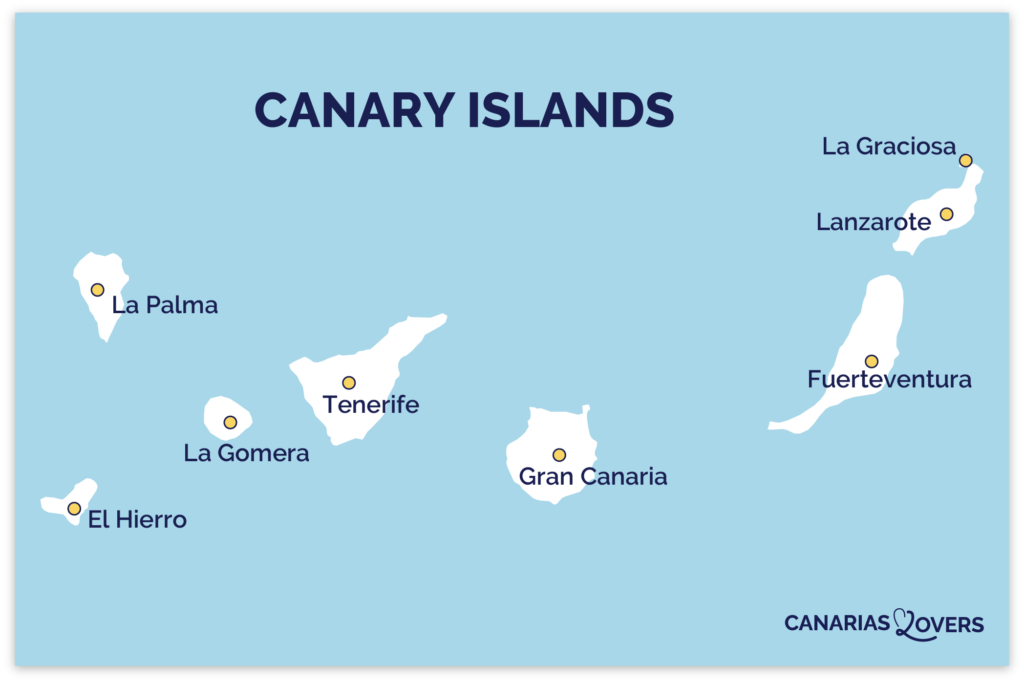
The Canary Islands consist of seven main islands, each offering radically different hiking experiences: volcanoes rising to over 3,700 meters, UNESCO-listed laurel forests, dizzying sea cliffs, and arid plateaus crisscrossed by deep ravines.
Here, we provide our island-by-island analysis to help you find the destination that best suits your skill level and preferences. And if you’d like a more general comparison of the islands, check out our article.
This opinion is completely independent, based on our experiences. We visited the region anonymously, making our own choices and paying our bills in full.
Our Take: Which Canary Island Is Best for Hiking?
The archipelago has more than 1,500 km of marked trails spread across all the islands, making it one of the most diverse hiking destinations in Europe at this latitude.
We are not providing a universal ranking here, as the ideal island depends above all on the type of hike you’re looking for. A high-mountain enthusiast will not have the same expectations as a tropical forest lover or a coastal hiker.

Each of the seven main islands has its own distinct character in terms of terrain, vegetation, and trail networks. We’ve tried to make this decision easier by organizing our selection by hiker profile, so you can quickly find the island that’s right for you.
- La Palma: for the avid hiker seeking elevation gain, volcanoes, and an extensive network of trails. The best-equipped island in the archipelago for multi-day hikes.
See top-rated accommodations in La Palma - La Gomera: for lovers of old-growth forests, silence, and untamed trails. Garajonay National Park is a rare experience in Europe.
See top rated accommodations in La Gomera - Tenerife: for those who want to hike to the summit of an iconic volcano or explore a laurel forest, and who appreciate a comprehensive range of tourist amenities.
See where to stay in Tenerife

- Gran Canaria: for hikers looking for a wide variety of terrain and difficulty levels, from coastal ravines to the ridges in the center.
See where to stay in Gran Canaria - El Hierro: for complete seclusion, deserted trails, and unspoiled nature. The perfect island for independent hikers.
Where to stay in El Hierro - Lanzarote: for its mineral-rich, lunar-like volcanic landscapes, which are very different from those of the other islands. Perfect for amateur geologists and volcano enthusiasts.
See where to stay in Lanzarote - Fuerteventura: for accessible coastal walks and a hike to the island’s highest point. Recommended for hikers who like to combine hiking and the beach.
See where to stay in Fuerteventura

- La Graciosa Island (part of Lanzarote): a hike through the sand
- Lobos Island (part of Fuerteventura): a one-day hike around the island

La Palma Island for Hiking
Types of Hikes
In our opinion, La Palma is the best island in the Canary Islands for hiking. The island has the densest network of trails in the archipelago, with more than 1,000 km of marked trails spread across the entire island, from the coastline to the Roque de los Muchachos at 2,426 m. The terrain varies considerably: Canary Island pine forests, a volcanic caldera, and recent lava flows from the Cumbre Vieja volcano.
We recommend this island for intermediate to advanced hikers, as the elevation changes are often significant. It’s also perfect for those who want to spend several days hiking, since we never felt like we’d exhausted all the possibilities.

Most Popular Hikes
- The Caldera de Taburiente is one of Spain’s most striking national parks. This volcanic caldera, 8 km in diameter and 1,500 m deep, is home to a dense forest of pine and laurel trees, fed by numerous year-round streams.
- The Barranco de las Angustias trail descends from the bottom of the caldera to the sea in about 5 hours. We were struck by the lush vegetation and waterfalls that line the trail.
- The Ruta de los Volcanes is the most iconic trail on La Palma. It runs along the southern volcanic ridge of the island, passing through the cones and lava flows of the Cumbre Vieja massif, whose 2021 eruption altered part of the route. The hike covers about 20 km and can be broken up into several stages, depending on your fitness level and the time you have available.
- The Las Tricias Trail and its magnificent dragon trees
- …

Where to Stay on La Palma for Hikers
La Palma offers a good variety of accommodations, particularly in Santa Cruz de la Palma (the capital), Los Llanos de Aridane, and in the mountain villages. For easy access to the main trails in the south, we recommend staying in Los Llanos de Aridane or the Fuencaliente area. Rural guesthouses are available in mountain villages for a more authentic experience.
View available accommodations in La Palma
La Gomera Island for Hiking
Types of Hikes
La Gomera is the most rugged hiking destination and one of the least visited in the Canary Islands. Its laurel forest in Garajonay National Park, a UNESCO World Heritage Site, makes it one of the few remaining intact primary forests in Europe. The island is small, but its terrain is very rugged: deep ravines, steep slopes, and misty plateaus alternate across an area of less than 370 km².
We recommend it to hikers who are willing to settle for more modest hotel accommodations in exchange for unspoiled nature and a sense of seclusion found nowhere else in the archipelago. We were surprised by the density of the vegetation and the near-total absence of noise on the trails.

Most Popular Hikes
- Garajonay National Park covers nearly 4,000 hectares in the center of La Gomera. The forest there is often shrouded in low-lying clouds, creating a unique atmosphere and vegetation carpeted with moss and lichens. Several trails crisscross the park, starting from various lookout points and surrounding villages. The loop trail starting at El Contadero (about 8 km, 3 hours) is a good starting point for exploring the site’s diverse flora.
- Valle Gran Rey, on the west coast of La Gomera, is the most convenient base for hikers. From there, several trails wind their way down from the island’s peaks to the waterfront, offering views of the cliffs and the rugged coastline. The trail connecting Valle Gran Rey to Arure and the hilltop villages to the north is particularly interesting because of its significant elevation changes and the diversity of the landscapes it passes through.

Where to Stay in La Gomera for Hikers
Most of the accommodations on La Gomera are concentrated in San Sebastián de la Gomera, the main port, and in Valle Gran Rey. Both villages offer easy access to the national park’s trails. San Sebastián is also the port of arrival for ferries from Tenerife, which makes inter-island travel easier.
View available accommodations in La Gomera
Tenerife Island for Hiking
Types of Hikes
Tenerife is an island of contrasts for hikers: you can hike the slopes of Mount Teide, Spain’s highest peak at 3,715 meters, and then reach the humid laurel forests of the Anaga Mountains in less than a two-hour drive. The trail network is well-maintained, the infrastructure is well-developed, and the trailheads are easily accessible from the major cities.
We consider Tenerife to be the best option for hikers who want to experience a wide variety of landscapes during a single trip. We also recommend it to beginners, thanks to the variety of difficulty levels available and the clear trail markings.

Most Popular Hikes
- Teide National Park is Spain’s most-visited protected area and the most iconic hiking destination in the Canary Islands. There are many trails of varying difficulty levels. Les Roques de García is a 3-kilometer loop trail that’s ideal for all skill levels and requires no reservation.
- The hike to the summit (3,715 m) is technically accessible, but requires a permit, which must be requested on the park’s official website.
- The Anaga Massif, in northeastern Tenerife, is a UNESCO biosphere reserve whose laurel forest is one of the best-preserved in the archipelago. The trails there are often narrow, damp, and steep, giving this mountain range a very different atmosphere from the rest of the island.
- Various ravines also offer unforgettable hikes, such as the Masca Ravine and the Barranco del Infierno
- See the best hikes in Tenerife

Where to Stay in Tenerife for Hikers
For hikers, we recommend staying in the northern part of the island, in Puerto de la Cruz or La Laguna, for easy access to Anaga and Mount Teide. If you’d also like to enjoy the beaches between outings, the southern part of the island offers more beach options. The Parador de Las Cañadas del Teide, located within the National Park, is the perfect place to start your hikes to the summit early in the morning.
See our selection of accommodations in Tenerife
Gran Canaria: A Hiking Destination
Types of Hikes
Gran Canaria is often underrated as a hiking destination, overshadowed by its reputation as a beach resort. Yet the island’s interior is a UNESCO biosphere reserve with dramatic terrain: deep ravines, basalt plateaus, pine forests, and wind-swept ridges.
We discovered an island that offers a wide range of hiking options, suitable for both beginners and experienced hikers. The trails are well marked, and the trailheads are accessible by bus from Las Palmas de Gran Canaria. We often tell those who ask us: Gran Canaria is well worth a detour away from the beach resorts in the south, and hiking is the best way to experience it.

Most Popular Hikes
- Roque Nublo is an 80-meter-tall volcanic monolith that rises to an elevation of 1,813 meters. It is the natural symbol of Gran Canaria and one of its most popular hiking trails. The trail from the Tejeda road is short (about 3 km round trip, 1 hour and 30 minutes), but on a clear day, the view from the summit is panoramic, stretching from the coast to the neighboring peaks. But you need to make a reservation now.
- The Barranco de Guayadeque is a natural gorge carved into volcanic tufa, whose walls are home to several cave villages that are still inhabited. The route from Agüimes to Ingenio passes through landscapes that are very different from the typical image of Gran Canaria.
- You can also go hiking in the desert gorges, on the sand dunes of Maspalomas, and throughout the mountains in the center of the island.

Where to Stay in Gran Canaria for Hikers
For hikers, the center of the island, around Tejeda or Cruz de Tejeda, is the most convenient location. There are many bed-and-breakfasts and rural guesthouses there. Las Palmas de Gran Canaria is also a good base for exploring the trails in the north and center of the island by public transportation or rental car.
See our selection of accommodations in Gran Canaria
El Hierro Island for Hiking
Types of Hikes
El Hierro is the smallest of the major Canary Islands and, by far, the least visited. That is precisely what makes it such a unique hiking destination: the trails are deserted, nature is completely unspoiled, and silence reigns everywhere. Designated a biosphere reserve by UNESCO, the island features a network of trails that wind through diverse landscapes, from the laurel forests in the north to the lava fields of the Golfo.
We consider El Hierro to be the best island in the Canary Islands for those who want to hike away from the crowds. We recommend it to independent hikers who are used to exploring areas with few trail markers and few tourists.

Most Popular Hikes
- The Ruta de Majona, in the north, winds through the laurel forest of Frontera beneath the clouds.
- The Sendero de los Tilos and the trail around the Golfo—a caldera opening onto the ocean—are among the most popular.
- the hike around Charco del Palo and the view from the Mirador de la Peña, designed by César Manrique.
- The Llania Forest and the Hoya de Fireba Volcano
- Hikes along volcanic cliffs such as La Maceta or Tamaduste, or through lava fields
- … Learn more about El Hierro

Where to Stay in El Hierro for Hikers
The range of lodging options on El Hierro is modest but authentic. La Frontera and Valverde have a few well-located hotels and guesthouses. Vacation rental apartments are available in mountain villages, offering a more immersive experience in the heart of the island.
See our selection of accommodations in El Hierro
Lanzarote Island for Hiking
Types of Hikes
Lanzarote is the quintessential volcanic island of the Canary Islands, but its hiking opportunities are different from those on the other islands. The terrain here is less rugged, there are no forests, and the trails mainly wind through rocky landscapes: fields of black lava, calderas, and rocky coastlines battered by the Atlantic.
We recommend Lanzarote to hikers who want to explore extraordinary geological landscapes rather than forests or high mountain peaks. We found the hiking experience here to be very different from that on other islands—often lunar in appearance, always a change of scenery, and visually stunning.

Most Popular Hikes
- Timanfaya National Park is the most spectacular area in Lanzarote from a geological standpoint. Access is strictly regulated: visitors cannot move about freely in the park and must either take the panoramic bus tour or follow the guided Tremesana trail, for which reservations are required (approximately 3 hours, free).
- The cliffs of Risco de Famara offer beautiful coastal hiking trails along the northwest coast.
- A hike along the beaches of Papagayo, the oldest part of the island
- A tour of the volcanoes outside Timanfaya National Park: Montana Cuervo, Montana Colorada, Montana Los Rodeos, Montana Roja, etc.
- You can also visit the island of La Graciosa to go hiking far away from it all
- See the most beautiful hikes in Lanzarote

Where to Stay in Lanzarote for Hikers
The island is small and easy to drive across, so you can stay anywhere on the island without any worries.
See our selection of accommodations in Lanzarote
Fuerteventura Island for Hiking
Types of Hikes
Fuerteventura is the least mountainous of the Canary Islands and the one with the most limited hiking options. Its terrain is gentle, its landscapes arid, and its network of trails less developed than that of the other islands. That said, it offers a few coastal trails and gentle climbs that appeal to hikers seeking peace and quiet and wide-open spaces.
We especially recommend it to those who want to combine a few walks with days at the beach. We enjoyed the tranquility of the trails in the northern part of the island, which are rarely visited and often swept by the Atlantic wind.

Most Popular Hikes
- The Jandía Peninsula, in the south of Fuerteventura, is the island’s most interesting mountain range for hiking. Pico de la Zarza (807 m) is the highest point on the island, and the round-trip hike from Morro Jable takes about 4 hours. The trail is well-marked, and the vegetation is sparse, but the view from the summit of both sides of the island is remarkable.
- To the north, you can go hiking in the Corralejo dunes, but be careful not to get lost
- And in the heart of the island, you’ll find trails around volcanoes and through the rolling hills near Betancuria
- andLobos Island offers the chance to hike all day through a stunning volcanic landscape

Where to Stay in Fuerteventura for Hikers
Morro Jable is the most convenient base for hiking on the Jandía Peninsula. The northern part of the island, around Corralejo, is best suited for hikers who want to explore the trails of the Dunes Natural Park and the secluded coves along the northeast coast.
See our selection of accommodations in Fuerteventura
Practical Tips for Hiking in the Canary Islands
When is the best time to go hiking in the Canary Islands?
The Canary Islands are great for hiking all year round, but the best time varies by island. For islands at significant elevations, such as Tenerife or La Palma, the months of March through June and September through November offer the best conditions: moderate temperatures, good visibility at the summit, and clear trails.

In the summer, it can get very hot in the lower elevations, and in the winter, snow can cover Mount Teide. On drier islands like Lanzarote or Fuerteventura, hiking is possible year-round. We recommend avoiding August throughout the archipelago if you plan to hike at high altitudes.
We recommend spring as the best time to visit, especially to see the wildflowers that add color to the trails on La Palma and El Hierro.
How to Get Around the Canary Islands for Hiking
A rental car is the most convenient way to get around during a hiking trip to the Canary Islands. It allows you to reach trailheads at any time, choose one-way routes, and easily carry your gear. See the cars available on our favorite platform.

On the larger islands, public buses serve the main hiking areas, but the schedules are sometimes not well suited for early morning departures. We also note that some popular starting points, such as those at Teide or Anaga, are accessible by bus from Santa Cruz de Tenerife, which may be a good option if you don’t want to drive.
Recommended Gear for Hiking in the Canary Islands
The required equipment varies depending on the island and the route you choose. For high-altitude hikes (Teide, Caldera de Taburiente, Roque Nublo), we recommend high-top hiking boots, warm clothing for the morning, and good sun protection. The forest trails on La Gomera and in Anaga are often damp, so waterproof shoes are a good idea.
For coastal hikes on Lanzarote or Fuerteventura, lightweight hiking shoes are sufficient. We always recommend bringing enough water, as water sources are scarce on most of the archipelago’s trails, regardless of the island.

DISCOVER THE Canary Islands