
Looking for something out of the ordinary in northern Fuerteventura? Let’s head tothe Alcogida Ecomuseum in Tefía. This restored farming hamlet immerses you in the daily life of the Majorero farmers of yesteryear, with its traditional houses, artisan workshops, and farm animals. We found this journey back in time particularly enlightening for understanding rural life on the island before tourism.
In this article, check out our photos and all our tips for making the most of your visit to the Alcogida Ecomuseum.
This opinion is completely independent, based on our experiences. We visited the region anonymously, making our own choices and paying our bills in full.
Why visit the Alcogida Ecomuseum?
Is the Alcogida Ecomuseum worth a visit? Our opinion:
Yes, the Alcogida Ecomuseum is worth a visit. We enjoyed this living museum, which faithfully recreates the architecture and rural traditions of Fuerteventura through seven restored houses. There, you’ll find pottery, embroidery, and basketry… It’s one of the best museums in Fuerteventura.

Why is the Alcogida Ecomuseum famous?
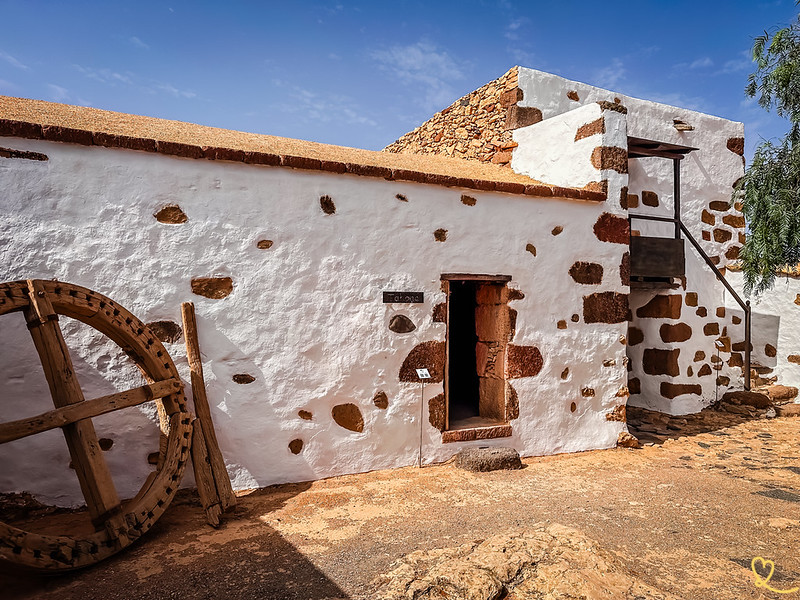
The site is recognized as the finest example of traditional Majorcan architecture on the island. We were surprised by the attention to detail that went into restoring the homes, each of which reflects the standard of living of the family that once lived there—from modest farmers to more affluent landowners.
In fact, each house has kept the name of its former residents, as a quiet tribute to those who once lived there.

Our favorite moments
Here are our top 3 picks for a visit to the Alcogida Ecomuseum:
- Stroll among the houses and imagine the daily lives of the families who lived there until the 1970s.
- Come across the farm animals—goats, donkeys, and camels—that still shape daily life in the hamlet.
- Learn about the different workshops and manufacturing methods

CHOOSING A HOTEL IN Fuerteventura
Choosing where to stay:
Choose by hotel type:
- 5-star hotels
- Best boutique-hotels
- Best adults-only hotels
- Best all-inclusive hotels
- Best hotels for families
- Best resorts (quiet or lively)
Our favorite: Hotel INNSide – See prices, photos and availability
Select by city:

Directions and Map: Alcogida Ecomuseum, Tefía
Where is the Alcogida Ecomuseum located?
- North of the town of Antigua, in the hamlet of Tefía, in the heart of Fuerteventura
- Travel time from Corralejo: 30 min,
- Travel time from Caleta de Fuste: 30 min,
- Travel time from Morro Jable: 1 hour and 15 minutes,
- Here is a map to help you find your way:

We also recommend combining this visit with a stop at the beach and the village of Puertito de los Molinos, located nearby, for a full day exploring both cultural heritage and the seaside.
How to get there?
The site is easily accessible by car, which is the mode of transportation we recommend for traveling to Tefía from the island’s major cities. The eco-museum has a large parking lot, which makes it much easier to get there.
Parking
A large parking lot is available, but please note: it is located across the street from the site. We recommend that you pay for your admission ticket before crossing to begin your tour, as payment is required in advance.

OUR TIPS FOR RENTING A CAR IN Fuerteventura
- Compare prices on our preferred platform: DiscoverCars – one of the best rated sites.
- A small car is all you need.
- But you can also choose a larger one if you wish, as the parking spaces are rather large.
- Demand is high, so book early.

Useful tips: duration, schedules, eating…
Best time to visit
Since the hamlet is open-air and has little shade, you should also avoid the hottest part of the day, especially in the summer.
Length of visit and main difficulties
Allow between 1 hour and 1 hour and 30 minutes to tour all seven houses and craft workshops. The entire site can be explored outdoors on foot, on generally flat terrain.

Advice on how to visit
You can wander freely through the hamlet, from house to house. We suggest you take the time to stop by each workshop and learn about the various crafts.
A LITTLE MORE patience
All the photos, maps, information and addresses you need to make your stay in the Canaries a success will soon be available in a single ebook!
Visiting with children
The Alcogida Ecomuseum is especially geared toward families. Your children will be able to watch grain being ground at the mill, bread and cheese being made the traditional way, and the animals being cared for.
Workshops and traditional games, such as sack races or rope and hoop games, are also organized for them from time to time. Let yourself be amazed by the excitement of the little ones when they see the camels and donkeys in the hamlet!

Schedules and rates
- The museum is listed as being open from 10 a.m. to 4 p.m. and closed on Sundays and Mondays.
- The admission fee is €5 for non-residents (free for children).
- Visit the official website for more info here.
HAVE FUN WITH THESE activities
- Dolphin watching
- Boat to Lobos Island
- Buggy tour
- But also; surfing lessons, 4WD tour in Cofete, windsurfing, scuba diving…

Seven Houses, Seven Family Stories
At the heart of the site are its seven houses, which have been restored in keeping with the island’s traditional architectural styles. We were struck by the diversity of styles, ranging from simple, unadorned rural homes to stately two-story mansions with balconies and wooden staircases under tiled roofs.

Each building reflects the standard of living of the family that lived there until the 1970s, ranging from modest farmers to more affluent homeowners. In fact, the houses have retained the names of their former occupants, such as Don Jacinto’s house or Herminia’s house.

This will allow you to easily imagine what daily life is like for these families, among their living spaces, patios, and farm buildings. We especially enjoyed imagining, through these whitewashed stone walls, the harsh but orderly life of the Majoreros as they coped with the arid climate.

Traditional Craft Workshops
Some of the houses in the hamlet have been converted into workshops, where artisans keep the crafts of yesteryear alive on a daily basis. Whether in person or via video, you can watch basket weavers working with palm fronds, embroiderers practicing *calado*—an openwork embroidery technique typical of the Canary Islands—and potters shaping clay using traditional techniques.

The complex also includes a bakery where traditional anise-flavored bread is made, a wheelwright’s shop, and a blacksmith’s workshop. This dynamic aspect truly sets the Alcogida Ecomuseum apart from traditional museums, where objects are often frozen in time behind glass cases.

A thriving farm amidst arid flora and fauna
Beyond its architecture, the Alcogida Ecomuseum also highlights the close connection between the hamlet’s residents and their natural environment.
The Animals at the Ecomuseum
Even today, the hamlet is home to domestic animals that once shaped the daily lives of Majorcan families, such as goats, donkeys, and camels—the latter having long served as a means of transportation and a source of labor on the island.
These animals serve as a reminder of just how central livestock farming was to Fuerteventura’s rural economy, long before the rise of tourism.

The Arid Flora of Fuerteventura
The site also features flora adapted to the island’s dry climate, consisting of cacti, tabaïbas, and palm trees that coexist in this arid landscape. We found it interesting to learn how the locals were able to make the most of these limited plant resources to meet their daily needs.
The very name of the site, “Alcogida,” refers to the areas designated for collecting rainwater—a constant concern for these rural communities. You’ll also notice the old water-collection systems scattered around the houses—ingenious examples of successful adaptation to a harsh environment.

History in brief
The Alcogida Ecomuseum tells the story of a traditional farming hamlet. Here are the key dates to remember:
- Until the 1970s: The hamlet of Tefía was home to families of Majorero farmers, who built their houses there using local stone and whitewashed them.
- In the 1990s: The Cabildo of Fuerteventura restored the seven houses in the hamlet to preserve the island’s ethnographic heritage.
- Today: The site functions as a living museum
The name “Alcogida” refers to the areas that were once used to collect rainwater, a precious resource on this arid island. We find that this detail speaks volumes about the ingenuity of the islanders in adapting to Fuerteventura’s dry climate.

Frequently asked questions
What does “Alcogida” mean?
The term “Alcogida” refers to areas that were once used to collect rainwater, a scarce and precious resource on this arid island. This name reflects the ingenuity of the island’s former inhabitants in adapting to Fuerteventura’s arid climate.
PLAN YOUR TRIP TO Fuerteventura
- Best of
Most beautiful landscapes
Best things to do in Fuerteventura
Most beautiful beaches
Cities and villages
Natural pools
Boat tours
Secret places, off the beaten track

- Practical advice
25 tips for a successful trip to Fuerteventura
How to get around
How to rent a car in Fuerteventura
Driving tips
Best excursions
Itineraries: 3 days – 4 days – 5 days – 1 week – 10 days