
Looking for something out of the ordinary? Let’s head to Las Salinas del Carmen, on the east coast of Fuerteventura. We were surprised by this site, which combines industrial heritage, nature, and tradition centered around the Canary Islands’ “white gold.” Between the museum dedicated to the history of salt and the open-air salt flats, this place offers a break that is as educational as it is exotic.
In this article, check out our photos and all our tips for making the most of your visit to the Salinas del Carmen.
This opinion is completely independent, based on our experiences. We visited the region anonymously, making our own choices and paying our bills in full.
Why visit the Salinas del Carmen?
Are the Salinas del Carmen worth the trip? Our opinion:
Yes, the Salinas del Carmen are worth a visit. With its museums, open-air salt flats, and seaside setting, the tour combines nature, culture, and a change of scenery. It’s one of the best things to do in Fuerteventura.
You can buy a combined ticket for several museums (salt, cheese, and windmills)— save time
Why are the Salinas del Carmen famous?
Las Salinas del Carmen are renowned for being the last active salt flats on Fuerteventura, a rare remnant of an industry that long sustained the island. They are also known for their unique extraction method: unlike other saltworks that pump in seawater, here the waves themselves fill the basins, producing what is known as *sal de espuma*, or “foam salt.”
See the best museums in Fuerteventura.
The whale skeleton installed near the pools has also become one of the site’s symbols.

Our favorite moments
Here are our three favorite moments from our visit to the Salinas del Carmen:
- The discovery of the one-of-a-kind “sal de espuma” process, which harnesses the power of the waves rather than pumping seawater.
- The tour of Don Manuel Velázquez Cabrera’s house, which gave us a better understanding of the history of the Canarian salt flats in general and these salt flats in particular.
- The outdoor walk among the tajos and cocederos, with the Atlantic Ocean as a backdrop and the whale skeleton watching over the site.

CHOOSING A HOTEL IN Fuerteventura
Choosing where to stay:
Select by hotel type:
- 5-star hotels
- Best boutique-hotels
- Best adults-only hotels
- Best all-inclusive hotels
- Best hotels for families
- Best resorts (quiet or lively)
Our favorite: Hotel INNSide – See prices, photos and availability
Select by city:

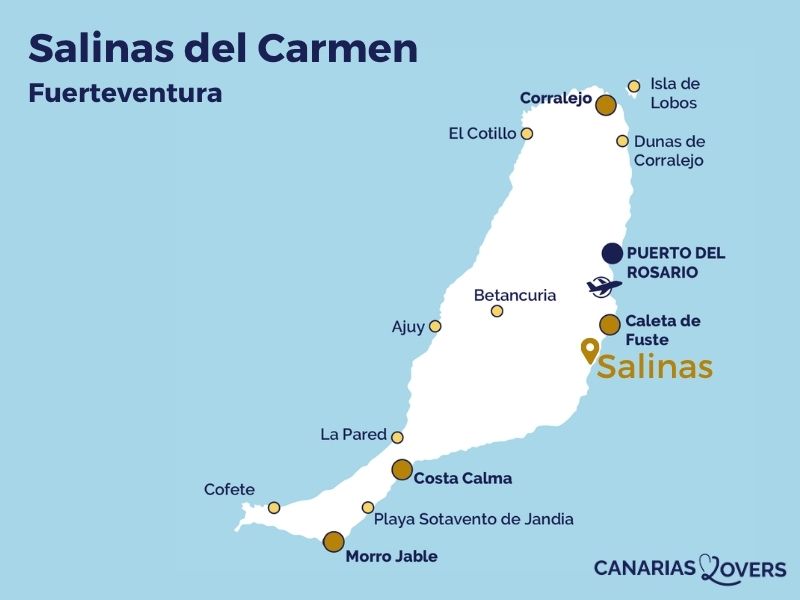
Directions and Map: Salinas del Carmen, Antigua
Where are the Salinas del Carmen located?
- In the village of Salinas del Carmen, on the east coast of Fuerteventura, in the municipality of Antigua
- Travel time from Puerto del Rosario: 15 min
- Travel time from Caleta de Fuste: 5 min
- Travel time from Fuerteventura Airport: 15 min
- Here is a map to help you find your way:
How to get there?
The easiest way to get to Salinas del Carmen is by car, especially if you’re staying far from the east coast. We recommend driving along the coast from Caleta de Fuste or Puerto del Rosario to reach the site. If you’re traveling without a car, please note that local bus lines (the Tiadhe network) stop at Salinas del Carmen, just a few minutes’ walk from the museum.
Parking
Free parking. Nothing to note.
OUR TIPS FOR RENTING A CAR IN Fuerteventura
- Compare prices on our preferred platform: DiscoverCars – one of the best rated sites.
- A small car is all you need.
- But you can also choose a larger one if you wish, as the parking spaces are rather large.
- Demand is high, so book early.

Useful tips: duration, schedules, eating…
Best time to visit
We recommend that you plan your visit for a time outside the hottest part of the day, especially since the outdoor tour takes place in direct sunlight. The morning or late afternoon are still the best times to explore the salt flats under ideal conditions.
Length of visit and main difficulties
Allow 30 minutes to 1 hour, depending on your interest in the topic.
No particular difficulty.

Advice on how to visit
The tour consists of two parts. We recommend starting with the indoor tour, inside the home of Don Manuel Velázquez Cabrera: his office traces the history of salt in the Canary Islands, the warehouse displays the salt workers’ tools, and the bedroom offers a glimpse into the daily lives of these workers through old photographs. Next, continue along the outdoor trail, through the “cocederos” and “tajos,” to the ruins of the old pier.
Schedules and rates
- Open daily, Monday through Sunday, during the following hours: 10 a.m. to 6 p.m. from May through October, and 9:30 a.m. to 5:30 p.m. from November through April.
- The admission fee is €6.
- Visit the official website for more info here.
- You can buy a combined ticket for several museums (salt, cheese, and windmills)— save time
Catering
A small café on site with a view of the salt flats.
The Salt Museum: Following in the Footsteps of the Salt Workers
The museum’s indoor exhibition recreates the home of Don Manuel Velázquez Cabrera, who owned the salt flats in 1910. We appreciated how each room tells a different aspect of this story: in the office, we learned about the general history of the Canarian salt flats before focusing on the Salinas del Carmen in particular.
You will then continue on to the warehouse, where traditional salt workers’ tools are on display, before ending your tour in the room where old photographs offer a better glimpse into the daily lives of these salt workers. We found this tour particularly educational for anyone who knows nothing about salt production.

The Sal de Espuma Process
What sets the Salinas del Carmen apart from other salt flats is the way they supply seawater. Whereas many sites pump water or channel it in, here it is the waves themselves that carry it directly to the cocederos—the pools where the water pools and warms up under the sun.
It then continues its journey through canals to the tajos—small pools—where it evaporates, leaving behind salt. This process produces a unique type of salt, known as ” sal de espuma,” which literally means “foam salt.” We enjoyed learning just how much this technical detail changes the very nature of the salt produced here—a salt that is particularly prized in the island’s culinary scene.

HAVE FUN WITH THESE activities
- Dolphin watching
- Boat to Lobos Island
- Buggy tour
- But also; surfing lessons, 4WD tour in Cofete, windsurfing, scuba diving…

Open-air salt flats
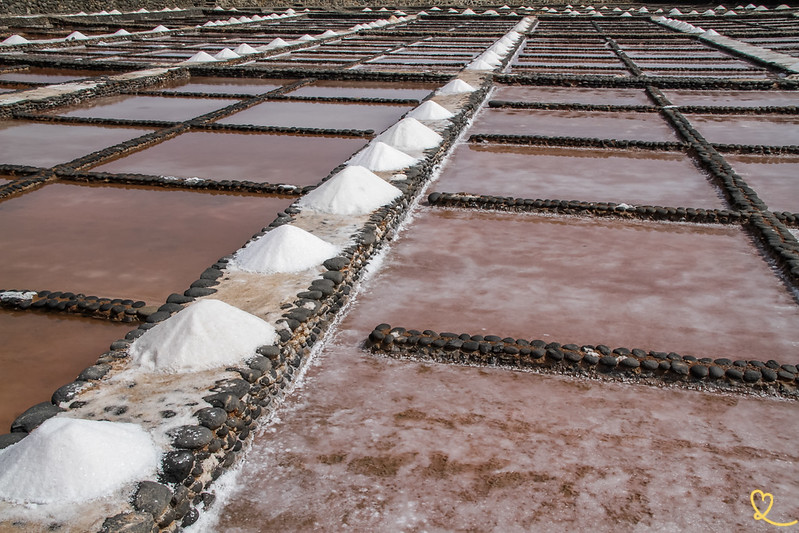
After touring the museum, it’s time to explore the outdoor trail, right in the heart of the salt flats. Covering an area of approximately 26,000 square meters, the site consists of about ten cocederos and nearly a thousand tajos. We enjoyed strolling along these pools with their white reflections, bordered by the Atlantic Ocean.
Take the time to observe the different stages of salt production, from filling the ponds to the small mountains of salt that form through evaporation. Today, it is the only place on Fuerteventura where this traditional activity is still practiced.

The whale skeleton and the old pier
As you walk through the outdoor area, two features in particular catch your eye. First, the imposing whale skeleton installed near the pools, which over time has become one of the site’s most recognizable landmarks.
Next, the remains of the old pier, a reminder of a time when the salt produced here was loaded directly onto ships for export.

History in brief
The history of Las Salinas del Carmen is closely tied to the history of salt production on the island. Here are the key dates we’ve highlighted:
- 1910: Don Manuel Velázquez Cabrera founded the Salinas de la Hondurilla, also known as the Salinas de la Torre, which later became the current Salinas del Carmen.
- Regis Program: An initial restoration project is making it possible to restore part of the salt flats.
- Continued work by the Cabildo of Fuerteventura: Restoration efforts are continuing on all of the site’s heritage elements, including the construction of the Salt Museum.
- Today: The site is managed by Proasur, which has modernized the museum’s exhibits to make them more interactive while continuing traditional salt production.

Frequently asked questions
Where does the name “sal de espuma” come from?
This name comes from the method used to supply seawater to the Salinas del Carmen. Unlike other saltworks, which pump water or channel it in, here the waves themselves carry the water to the basins, producing a salt known as “foam salt.”
PLAN YOUR TRIP TO Fuerteventura

- Practical advice
25 tips for a successful trip to Fuerteventura
How to get around
How to rent a car in Fuerteventura
Driving tips
Best excursions
Itineraries: 3 days – 4 days – 5 days – 1 week – 10 days